
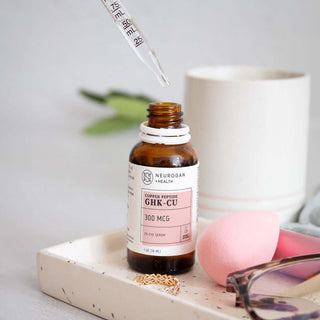
In recent years, the skincare and regenerative medicine communities have increasingly turned their attention to a small but mighty molecule: GHK-Cu copper peptide. This peptide complex is renowned for its remarkable ability to stimulate skin repair, combat aging, and enhance wound healing. As consumers seek scientifically supported solutions to maintain youthful skin and accelerate recovery, GHK-Cu copper peptide has emerged as a promising option. Its multifaceted benefits make it a hot topic among dermatologists, researchers, and skincare enthusiasts alike — inviting a deeper exploration into its mechanisms and potential applications.
Unveiling GHK-Cu: Understanding the Copper Peptide Phenomenon
GHK-Cu, short for Glycyl-Histidyl-Lysine with Copper, is a naturally occurring copper-binding peptide found in human plasma, saliva, and tissue. Its discovery dates back to the 1970s when scientists observed its potent ability to recruit immune cells and promote tissue regeneration. Unlike many monotherapies, GHK-Cu acts as a biochemical conductor—regulating gene expression, stimulating collagen synthesis, and facilitating cellular repair — all while maintaining a balanced interaction with the body’s natural immune response. This intricate interplay makes it an extraordinary subject for targeted therapeutic and cosmetic applications.
What makes GHK-Cu particularly intriguing is its dual role: it not only supports tissue regeneration but also possesses antioxidant properties that mitigate oxidative damage. Its ability to bind copper—a vital trace element—serves as a catalyst in enzymatic reactions, especially those involved in antioxidant defense and wound repair. Understanding this peptide’s fundamental nature sheds light on why it’s viewed as a breakthrough in regenerative medicine and anti-aging therapies. As science continues to unravel its mechanisms, the full potential of GHK-Cu as a biological rejuvenator remains to be fully tapped.
GHK-Cu’s Role in Skin Health: A Scientific Perspective

The skin, as the body’s largest organ, is constantly exposed to environmental stressors like UV radiation, pollution, and daily wear-and-tear. These factors accelerate collagen breakdown, reduce elasticity, and promote signs of aging. Scientifically, GHK-Cu is shown to influence key processes that restore skin’s vitality by promoting fibroblast proliferation and new collagen production, essential components for youthful skin texture. Research has demonstrated that the peptide can upregulate genes responsible for extracellular matrix synthesis while downregulating matrix metalloproteinases (MMPs) — enzymes that degrade collagen and elastin.
From an immunological standpoint, GHK-Cu modulates inflammation, which is crucial for skin repair and healing. It recruits immune cells and stimulates the release of cytokines and growth factors that enhance healing while minimizing scar formation. The peptide also stimulates angiogenesis, the formation of new blood vessels, ensuring an adequate supply of nutrients and oxygen to regenerating tissues. These combined effects illustrate how GHK-Cu acts as a master regulator of skin health, making it a compelling candidate for anti-aging treatments and skin rejuvenation regimens grounded in scientific research.
The Anti-Aging Potential of GHK-Cu: Exploring the Evidence
Age-related skin deterioration results from accumulated oxidative stress, collagen degradation, and compromised cellular repair. Empirical studies reveal that GHK-Cu has significant anti-aging effects by reversing some of these processes. Laboratory experiments demonstrate that topical application of GHK-Cu increases skin thickness, reduces wrinkle depth, and enhances elasticity, often outperforming traditional anti-aging compounds in clinical contexts.
Furthermore, GHK-Cu influences DNA repair and cellular longevity—two vital factors in delaying the signs of aging. It activates pathways related to rejuvenation, such as the upregulation of telomerase activity, which extends the lifespan of skin cells. Many users and practitioners report visible improvements in skin tone and firmness after consistent use, aligning with scientific findings. While more long-term studies are necessary, current evidence supports GHK-Cu as a potent anti-aging agent capable of restoring skin vitality at the cellular level and offering a more natural route to youthful skin.
GHK-Cu and Wound Healing: Benefits and Applications
One of the most well-documented benefits of GHK-Cu lies in its ability to accelerate wound healing. It enhances the recruitment of immune cells, promotes angiogenesis, and stimulates the synthesis of new extracellular matrix—all critical elements in tissue repair. This makes GHK-Cu invaluable in medical settings for chronic wounds, surgical recovery, and burn treatments, where conventional therapies may fall short or require extended periods for tissue regeneration.
Clinically, application of GHK-Cu on skin wounds has demonstrated significant reduction in healing time and minimized scarring. Its capacity to stimulate cellular regeneration while controlling inflammation provides a dual advantage, especially in delicate cases such as diabetic ulcers. Commercially, this translates into the development of wound dressings, serums, and topical creams designed to harness GHK-Cu’s regenerative properties. The broad scope of these applications highlights a future where peptide-based therapies could revolutionize standard wound care by emphasizing natural, biocompatible, and effective healing solutions.
GHK-Cu: Formulation, Dosage, and Considerations for Use
When it comes to utilizing GHK-Cu, formulation and application methods matter greatly for maximizing benefits. Typically, it is incorporated into serums, creams, and other topical solutions because of its high stability in liquid formulations and ability to penetrate the skin barrier. The recommended concentration in skincare products varies—though most formulations contain 0.1% to 0.5%, aligning with concentrations shown effective in studies. Proper storage, away from light and heat, is crucial to preserve peptide activity over time.
Dosage considerations for topical use are generally guided by product instructions, but consistent daily application often yields the best results. Because GHK-Cu is a bioactive peptide, it’s important to ensure compatibility with other skincare ingredients and to monitor skin responses during initial use. As with any novel compound, consulting healthcare providers or dermatologists before beginning use is advisable, especially for those with compromised skin or underlying conditions. Future formulations may see enhanced delivery methods—like nanoencapsulation—to improve bioavailability and efficacy.
GHK-Cu: Comparing Copper Peptide Derivatives and Future Research
While GHK-Cu is currently the most studied copper peptide, several derivatives and analogs are emerging, each aiming to amplify specific benefits or improve stability and delivery. For example, peptides like GHK-Cu methyl esters or conjugates are under research for increased skin penetration and enhanced cellular activity. Comparing these derivatives enables researchers to understand the structure-activity relationships, optimize therapeutic doses, and tailor treatments for specific applications such as anti-aging, hair growth, or scar minimization.
Looking ahead, future research is poised to explore synthetic or naturally derived mimetics of GHK-Cu with improved stability and bioavailability. Additionally, research into combination therapies involving GHK-Cu and other growth factors or antioxidants might unlock synergistic effects that surpass what peptides can achieve alone. As the molecular understanding deepens, personalized peptide formulations could become standard in regenerative medicine, offering targeted solutions for skin rejuvenation and healing that are safe, effective, and minimally invasive.
Conclusion
The remarkable potential of GHK-Cu copper peptide lies in its ability to bridge the gap between natural biological processes and therapeutic interventions, empowering skin regeneration, anti-aging, and wound healing. Scientific research continues to uncover its complex mechanisms, revealing benefits that enhance tissue repair, restore skin’s youthfulness, and promote cellular health. As formulations improve and future studies expand, GHK-Cu is poised to become a cornerstone in innovative skincare and regenerative medicine, offering hope for healthier, more resilient skin—at any age.